The Season of Formula One
By Shenron on Jan 05, 2008 with Comments 0
Every year, the Formula One World Championship Racing season spans from early spring until fall. The races are held in different places all over the world, each following the same pattern. Each of its racing events is held thrice a week–Friday, Saturday, and Sunday.
Although this is the usual schedule, an exception to this is the Monaco Grand Prix held in Monte Carlo. In here, Friday practices are done instead on Thursday and each driver is allowed to practice twice on Friday and once on Saturday. In addition, a team is also permitted to use three drivers during their Friday practice but they should only use a maximum of two different cars.
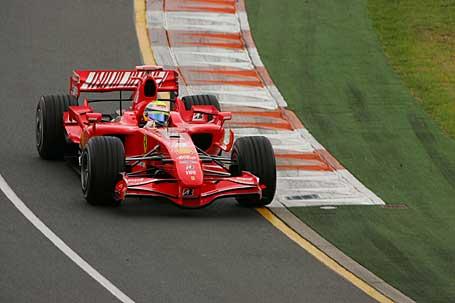
Practice sessions are held before the start of the qualifying sessions. In Formula One racing, Friday and Saturday mornings are considered as practice days.
The qualifying sessions, which then follow, are used to organize the participants according to their starting positions during the main event. A “knock-out system” is used for multiple sessions, which eliminates the six slowest drivers in each round. The starting positions are determined in an ascending order. The first six slowest drivers assume the final positions in the line-up until the fastest drivers among the group fill up all the starting positions.
On the race day, a light grid is installed at the starting line to signal the start of the Formula One racing. The race is approximately a little over 190 miles long and the number of laps to be raced varies according to the current venue’s track length.
Before beginning the said event, racecars undergo a warm-up formation lap. This process is used by drivers to be able to place their cars in the correct starting position. This avoids the possibility of getting delayed due to equipment issues when cars undergo their respective pit stops. During pit stops, race cars get their tires changed, tank refueled, and equipments checked and maintained. Work must be done within a few seconds, keeping accuracy in troubleshooting concerns and safety as the top priority. During these pit stops, spectators are highly prohibited from approaching the pit areas.
Throughout the race, audiences will see race marshals waving flags to communicate with the drivers. Each flag has its own specific color to serve a specific purpose. The flags serve as both warning and information for each driver’s status during the race.
As the race comes to an end, the top eight drivers are the ones who receive points. The number of points received ranges from 1 up to 10 in Formula One racing. The first driver to finish receives 10 points together with his team while the one driver who comes in at second place gets 8 points. In Formula One racing, a maximum of two cars are allowed to be entered for a team. In case both cars qualify in the top eight, the points gained by the two winning cars may be added up by the team to help increase their total and their chances of winning.
The points won at each racing weekend are tallied to determine the overall season results. The driver and the team who earns the topmost points are then hailed as the World Champions of the said Formula One race thus capping a season-long event of fun, excitement, hard work, and anticipation.
Filed Under: General
