Common Terms Used In F1 Racing
By Shenron on Nov 28, 2007 with Comments 1
Like any other sport, Formula One racing is governed by its own set of rules and regulations continually shaped throughout its history. Because of this, it is inevitable that certain terms may have been developed to pertain to some of its specifics. These may not be grasped nor understood by new enthusiasts. Listed as follows are some of the important terms often misunderstood and misused in F1 racing.
Contrary to popular notion, the term “clean air” in F1 racing does not pertain to safe and fresh breathing air. On the other hand, clean air is a term used to identify the air encountered by the leading car in an ongoing race. Clean air is considered to be an advantage for the leading racecar since this air is not yet affected by turbulences possibly caused by other racecars. As such, it gives the best aerodynamic grounds for the leading racecar.

If the race is bound to reach its end but the driver suddenly realizes that his fuel would not be enough to last until the race is finished, he would then have to “splash and dash”. This means that the driver would have to enter his pit so that the pit crew could put only a small amount of gasoline in his car, just about enough to let the car finish the race. The refueling does not have to be full tank. It got its name as “splash and dash” since the car gets only a splash of gas and must afterwards dash off towards the finish line.
A “stop-go penalty” may also be enforced during an F1 racing. In this penalty, the driver is then required to stop for ten seconds inside his pit area before going back to rejoin the race. During the ten-second penalty, nothing may be done to reinforce the racecar’s needs such as refueling or tire changes. It is plainly a time-out penalty without any other benefits.
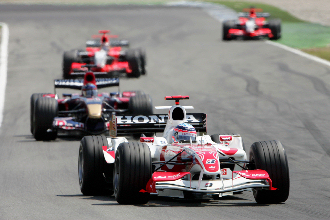
Another known penalty is called the “drive-through”. As it speaks for itself, the driver simply needed to drive-through at his pit area within a regulated speed before rejoining the race.
During an F1 race, “stewards” are the event’s three highest-ranking officials who are mainly responsible in making decisions about the race and the drivers. “Marshals” are the ones in charge of making sure that race runs smoothly and safely. Apart from the race drivers, they are responsible for the safety of the spectators, which is why they are often seen waving different color-coded, flags from time to time.
On an F1 racing weekend, each teams’ motor homes and transporters are kept in an area called as the “paddock” wherein only authorized persons are permitted to reach. Another off-limits area to the public is the “parc femme”. The parc femme is a special fenced area where racecars are kept after completing the qualifying race. Even team members are strictly prohibited from the area so that alterations on the racecars would be prevented. On the race day itself, each race team together with their necessary equipment is placed in the “pits”. This is where the racecars make their “pit stop” for necessary car changes during the race.
F1 races also have “pit walls” which houses the team managers, owners, and engineers as they monitor the ongoing race.
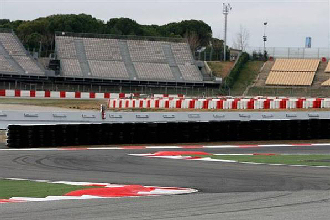
On the racetrack, another important term often used is the “chicane”. A chicane is a section on the race track which helps slow down cars by using a series of coners that alternate direction as a car drives by. This is an important safety feature used on F1 racetracks.
Brushing up on these terms would surely help any new F1 fans enjoy the sport more as they encounter different possibilities while watching the action unfold right in front of their very eyes.
Filed Under: General

[…] Common Terms Used In F1 Racing […]